
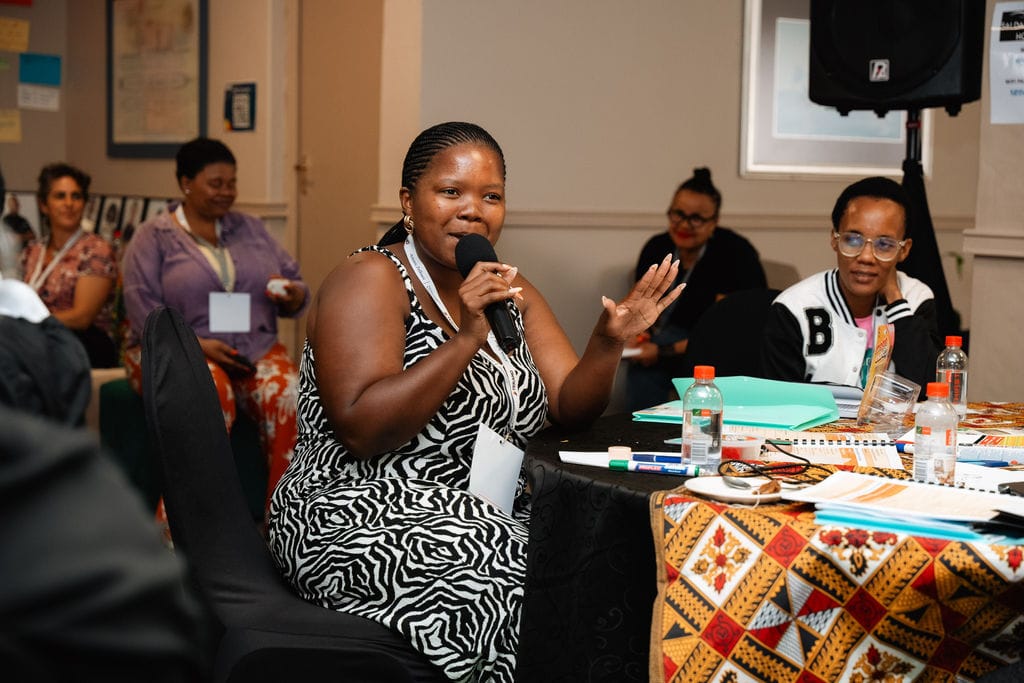
That is why I am immensely proud of the comrades from civil society who shaped and drove what became the final version of this National Dialogue Convention. It was essential to convene this space before the fever of local government elections and the unethical campaigning that usually overshadows genuine engagement.
While some criticism from designated groups remains valid, the convention, to me, felt inclusive and citizen-driven. Importantly, there was no interference from government in the conversations. Both panels brought together a diverse range of voices, ensuring representation from different walks of life. I am hopeful about the rollout of the upcoming dialogues, which will be rooted in communities, using approaches that are truly accessible to people.
In the dialogue lab we led as Equal Education, our focus was on shifting the culture of governance engaged in this country. We explored health and education as fundamental rights. The rights that create the foundation for all others to be realised. A critical part of our recommendations was the recognition and incorporation of indigenous learning systems, as the current education system is visibly under strain. We also emphasised transforming how we care for children, ensuring that rights are not only acknowledged but meaningfully upheld.
As we go forward, for me, it is important that we see more participation from government. Yes, we appreciate the little interference, but comrades must not roam around like they were summoned by the president to come to something that they were not keen to be part of. Secondly, whatever becomes of the steering committee, it must engage already organised groups of people to hold meaningful dialogues. We cannot, with the current trust deficit, rely on people organising themselves for this rollout.
As a member of the education and youth sector, I remain deeply committed to this process. I urge all of us to safeguard it from elitism and electioneering, ensuring that it continues to serve the people it was created for.
By Itumeleng Mothlabane, General Secretary of Equal Education and Tekano Fellow.
Recent Comments