
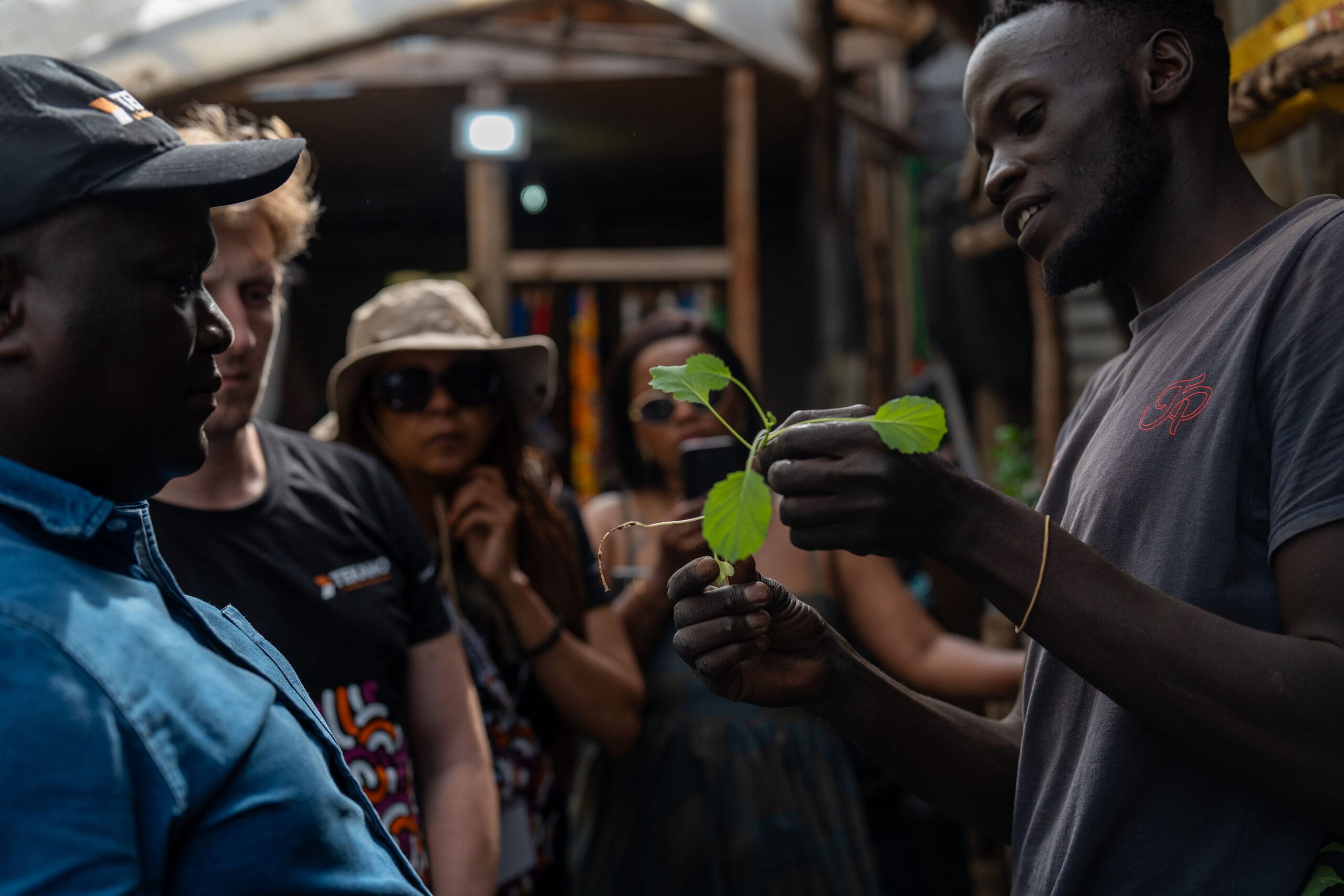
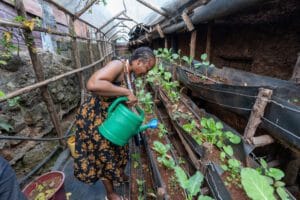
 Historical immersion continued with a visit to the Judiciary Basement Museum, a former detention site for political prisoners and now a living archive of Kenya’s legal and political journey. Fellows then explored Kibera, gaining lessons in community-led organising, resilience, and local political contestation. At Mtaa Safi Initiative, a youth-led urban farming project, Sylvester Ochieng demonstrated how neglected spaces could be reclaimed to grow food, opportunity, and dignity. Fellow Bakhusele Mathupha reflected: “My takeaway from Kibera is that when communities come together, they are able to produce food in abundance. They are collecting garbage almost every day, returning it to the soil by growing food and making compost. This is one of the most influential aspects of agriculture, taking from the land and bringing back to the land.”
Building on these insights into grassroots community action, fellows also visited a community health centre in Kawangware. There, they engaged with local practitioners and activists to understand the realities of delivering health care in resource-limited settings. The visit highlighted the innovation, resilience, and dedication required to provide accessible care and reinforced lessons from Kibera about the power of collective community action.
 Fellows then explored the intersections of creative expression, technology, and digital activism at Nadharia CBO, an organisation supporting LGBTQI+ communities. Fellow Mamotingoe Lesupi noted Nadharia’s inclusive approach to integrating art, health tech, and food tech: “Kenya is actively implementing technological solutions to health problems, especially electronic health record systems. What stood out is how Nadharia integrates art into tech, health tech, and food tech, ensuring whatever is built is inclusive and accessible to queer persons as well.” Fellow Sekwaila Bopape highlighted Kenya’s innovation ecosystem: “I like that they are incorporating AI into art and bringing it to life. Kenya is one of the leading countries in innovation across Africa, and it’s inspiring to see young people upskilling in tech. This is what we need to see the youth doing.”
 From Pan-Africanist grounding and political memory to community-led environmental justice, grassroots health provision, and innovation, Nairobi offered fellows a living example of what it means to struggle, survive, and imagine otherwise. Mildred Ngesa’s call to reject isolation and embrace continental solidarity remains central: understanding African histories and learning from one another is not an academic exercise, but a step toward dismantling lingering colonial structures and reclaiming agency for Africa’s present and future.
Recent Comments